Emergency hydro jetting for a drain that keeps backing up
Hydro jetting is usually scheduled work, but it becomes an emergency job when a line has backed up more than once in a short time, when a restaurant or shop cannot operate, or when cabling clears the clog and it returns within days. A high-pressure jet scours the pipe wall instead of punching a hole through the blockage.
Call (954) 697-4920 any time and describe what keeps happening. If a camera look is needed first to confirm the line is intact, we say so, since jetting a damaged line can make a break worse.
What hydro jetting actually does differently than snaking
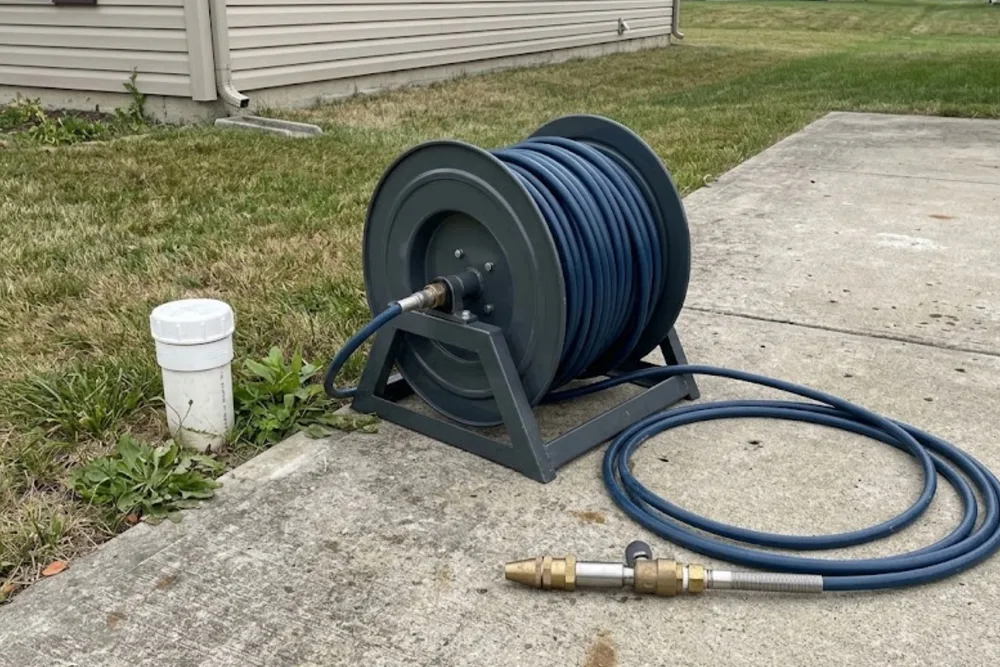
A standard drain snake punches a channel through whatever's blocking the pipe, which clears the immediate clog but leaves buildup coating the rest of the pipe wall. Hydro jetting uses a high-pressure water hose to scour the full diameter of the pipe, removing grease, scale, and root intrusion along the entire run rather than just the blocked section.
This matters most for a drain that clogs repeatedly in the same spot, since a repeat clog usually means the pipe wall itself has enough buildup that a new blockage forms again within weeks or months of the last snaking.
When jetting is the right call, and when it isn't
Jetting makes sense for grease-heavy kitchen lines, commercial kitchens on a maintenance schedule, and older clay or cast-iron drain lines dealing with root intrusion. It's not usually the first step for a single, isolated clog with no history, where a standard snake is faster and cheaper.
A pipe that's already cracked or severely deteriorated is a case where jetting at full pressure isn't the right call until a camera inspection confirms the line can handle it, since high pressure against a compromised pipe can make a bad situation worse rather than better.
What to expect during a jetting visit
A technician first confirms access to the line, usually through an existing cleanout, then runs the jetting hose the full length while monitoring pressure and flow. For a line with a known camera-confirmed condition, the visit is usually a single pass. For a first-time jetting on an unknown line, we may run a camera before and after to confirm the result.
Afterward, water should drain noticeably faster than before, and a follow-up camera check on request confirms the pipe wall is actually clear rather than just unblocked at one point. Most residential jetting jobs finish within an hour or two depending on line length and how much buildup was actually present.
Residential versus commercial jetting equipment
Residential jetting uses a lighter-duty unit sized for standard 2 to 4 inch home drain lines, while commercial jetting for a restaurant's larger grease-heavy lines or a property's main sewer connection uses higher-pressure, higher-volume equipment built for bigger pipe diameters and heavier buildup. Using the wrong scale of equipment either wastes time on a small residential job or fails to actually clear a commercial-scale blockage.
We bring the equipment sized to the actual line, which is part of why describing the property type and general plumbing setup when scheduling helps make sure the right crew and equipment show up the first time.
What callers ask about jetting visits
The most common questions are what a visit costs and whether a camera look is included. Price depends on line length, access through a cleanout and how much buildup is packed in, so we confirm the number before the equipment goes in. Pairing a jetting visit with a camera pass is worth it when a line has had repeated stoppages, because it shows what the jet cleared and what is still damaged.