
Emergency leak detection: water meter running with everything off
If the leak indicator on your water meter keeps moving after every fixture, appliance and irrigation zone is off, water is escaping somewhere on the property. That is the most common reason people call for leak detection, and it is worth acting on the same day because a steady leak keeps adding to the bill and can wash out the soil under a slab.
Close the main shutoff valve at the house and watch the meter again. If the indicator stops, the leak is on the house side of the valve. If it keeps moving, the loss is on the buried line between the meter and the house. Telling us which one you saw shortens the visit. Call (954) 697-4920 any hour and the nearest available technician is dispatched.
The signs a hidden leak leaves behind
A slab leak rarely shows up as standing water. More often it's a warm spot on the floor over a hot water line, a water bill that jumped with no new usage to explain it, or a faint sound of running water when every fixture in the house is off. Any one of these on its own is worth a look. Two or more together usually means something is actively leaking right now.
In Pompano Beach specifically, the age profile matters. A home built before 1980 with cast-iron pipe under the slab is the most likely candidate for this kind of leak, since that's exactly the pipe material and age range where internal corrosion tends to break through.
Older neighborhoods like Pompano Beach Highlands, Palm Aire, and Old Pompano near the Hillsboro Inlet Lighthouse see this pattern more than the newer sections further west. Repairs on any of these lines are performed to the Florida Building Code, Plumbing, the statewide standard based on the International Plumbing Code.
How we find it without breaking up the floor first
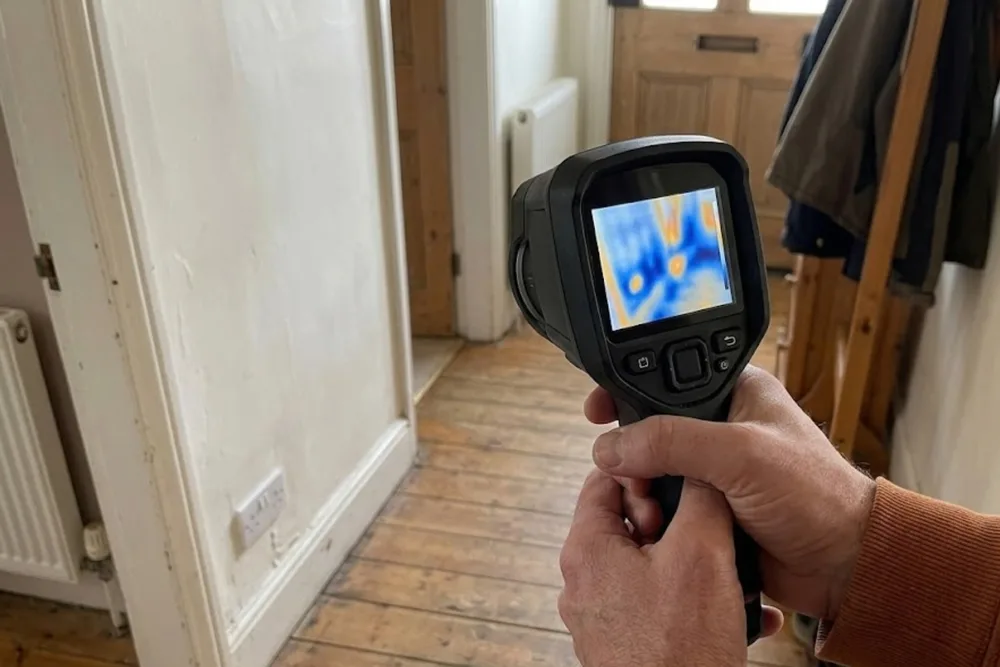
Acoustic listening equipment and thermal imaging locate the leak's approximate position from above the slab, which is what lets a repair open one targeted section of flooring instead of jackhammering a wide search area. Pressure testing on isolated sections of the line also helps narrow down which run is actually losing water when there's more than one candidate.
Once the leak is located, the next decision is whether to repair that one section of pipe or treat it as a sign the rest of the line needs the same attention. On a home with cast-iron pipe from the same era, a single leak is often the first of several, and we'll tell you honestly if that's the pattern we're seeing rather than just patching the one spot.
What happens after the leak is found
Once located, a single isolated leak on an otherwise sound line usually gets repaired directly, either by accessing that one section of slab or pipe, or by rerouting a short section above the slab to bypass the damaged run entirely, which is sometimes faster than breaking concrete.
If the leak turns out to be the first sign of broader corrosion along a cast-iron or galvanized line, patching that one spot is a short-term fix at best. We'll say so plainly, along with what a fuller repiping conversation would involve, rather than repairing the same pipe every year or two.
Leak detection during a home purchase or insurance inspection
A pre-purchase leak detection check makes sense specifically for homes built before 1980 in this area, since a buyer taking on a house with original cast-iron supply lines is effectively inheriting whatever corrosion has already happened, visible or not. Finding that out before closing changes the negotiation, not just the repair timeline.
Some insurance carriers also request a leak inspection report after a claim involving water damage, to document that the underlying cause was addressed rather than just the visible damage. We provide readings and findings in a form suitable for that kind of documentation when asked.
What to do before you call about a possible leak
A few checks take under a minute and help narrow things down before a technician arrives: note whether any floor area feels warm to bare feet, check if the water meter's leak indicator is spinning with every fixture in the house off, and look at the last two water bills side by side for an unexplained jump.
If water is visibly pooling anywhere, shut off the main water valve, usually near the water meter or where the line enters the house, before calling. That single step limits damage far more than anything done after the technician arrives.
Leaks on the buried line between the meter and the house
A leak on the service line rarely shows up inside the home at first. The clues are a soft or unusually green patch of yard, water pooling near the meter box, pressure that sags when the irrigation runs, or a meter that never fully stops. Locating it with acoustic equipment lets a repair open a short stretch of ground instead of trenching the whole run.
If the line is old enough that repeated repairs are likely, we lay out the replacement option next to the spot repair so the decision is made with real numbers in front of you. A full line replacement is a larger job, and our repiping and whole-home pipe replacement page explains how that scope is handled.
Stains on a ceiling or damp spots on a wall
A brown ring on a ceiling or a damp patch low on a wall usually points to a pipe or fixture above or behind it, and the visible spot is often not where the leak starts.
Thermal imaging and moisture mapping trace the wet area back to its source, which keeps a repair from opening the wrong section of drywall. If the stain sits under a bathroom, the shower pan, tub drain and supply stub-outs above are the first places we check.
Wet drywall, insulation or flooring is a separate job from stopping the leak. When materials are soaked, our water mitigation page covers the drying side, and the leak itself still has to be found and fixed first.
Commercial and multi-unit leak surveys
Shopping plazas, apartment complexes and small multi-unit buildings raise questions a single home does not, such as which meter feeds which unit, which valves isolate a section, and whether a wet parking lot is a supply leak or a drain problem. We start by isolating zones with the valves available, then listen and pressure test the sections that still lose water.
For properties run by an off-site manager, we can coordinate access through the manager and give a written summary of what was found so work orders and insurance notes stay accurate. Our commercial plumbing page covers the wider commercial side.
Irrigation, pool and spa line leaks
Not every hidden leak is in the house plumbing. A zone that runs weak, a valve box that stays full of water, or a pool or spa that loses level faster than evaporation would explain can all point to a buried line. We separate irrigation and pool plumbing from the house supply by isolating each branch, so the repair goes to the line that is actually leaking.
Leaks under the floor of the house
Most homes in this area sit on a concrete slab, so a leak under the floor generally means a supply or drain line inside the slab, which is the territory of slab leak detection and repair.
Homes raised on piers or with a low access space are different, because the lines can be reached from below without cutting concrete. Either way, a warm floor spot, the sound of running water at night and a sudden jump in the bill are the signs worth reporting on the call.