
Emergency water damage response, 24/7
Water damage gets worse by the hour, so an emergency call is the right move when a pipe has burst, a ceiling has come down or standing water is spreading. Stop the source if you safely can, switch off power to wet areas at the breaker and call (833) 521-1033. Dispatch runs 24/7.
Why this is a different service than fixing the pipe
Fixing a burst or leaking pipe stops the water. It doesn't dry out the drywall, flooring, or subfloor that already absorbed it, and standing moisture left untreated for more than 24 to 48 hours creates real conditions for mold growth, regardless of how good the plumbing repair was. That's why restoration and the pipe repair are handled as separate services here, on separate scheduling and, on this specific page and its water mitigation counterpart, a separate phone line from the rest of the site.
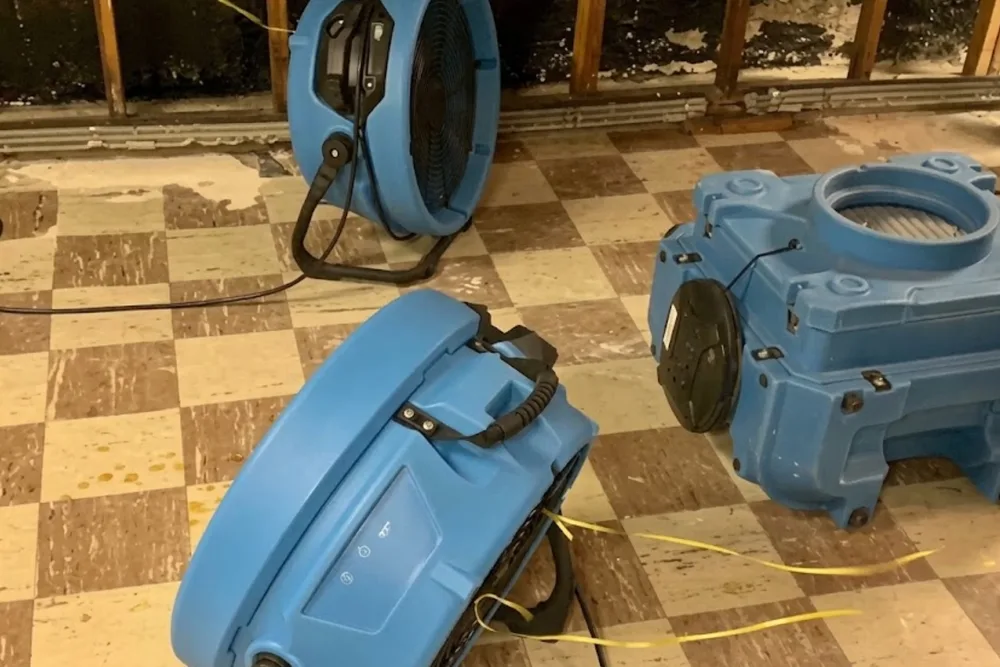
In Pompano Beach's humidity, that 24-to-48-hour window is tighter than it would be in a drier climate. Moisture meters and, where needed, industrial air movers and dehumidifiers get deployed based on actual readings, not a fixed schedule, since a small kitchen leak and a slab leak that's been running for days call for very different equipment.
What the restoration process covers
Restoration starts with assessing how far moisture has traveled, since water wicks sideways through drywall and under flooring well beyond the visible wet spot. Affected materials that can be dried in place get dried. Materials too saturated to save, like soaked drywall or particleboard cabinetry, get removed to prevent mold rather than dried and left to fail later.
Documentation matters here too. Moisture readings and photos taken throughout the process are the kind of record insurance adjusters ask for, so keeping that paper trail is part of the job, not an extra.
What determines the cost of a restoration job
The two biggest cost drivers are how long water sat before it was caught and how much material has to be removed rather than dried in place. A leak caught within a day, with only a small area of drywall affected, is a much smaller job than a slab leak that ran for a week before anyone noticed the water bill.
We give pricing on site after assessing the actual extent of moisture, not a phone estimate based on a general description, since two jobs that sound similar over the phone can turn out very differently once the walls are opened and the moisture meter readings come back.
Mold risk and when it becomes a separate concern
Mold growth becomes a realistic risk once materials stay wet past roughly 48 hours in this climate, which is part of why drying starts immediately rather than waiting for a full assessment first. Visible mold on a surface that can be cleaned is handled as part of the restoration. Mold that's gotten into wall cavities or subfloor is a different scope of work.
We don't make specific health claims about mold exposure since that's a medical question, not a plumbing one. What we can speak to directly is the moisture conditions that let mold start growing in the first place, and getting those conditions eliminated fast is the actual point of the drying process.
Emergency steps before we arrive
A short checklist that genuinely helps: shut off the water source if it's still actively leaking, move furniture and rugs off wet flooring if it's safe to do so, and avoid running any electrical appliance in standing water. Photograph the affected area before moving anything, since that documentation is useful either way.
Don't try to dry large areas with a household fan alone or run the air conditioning expecting it to handle the moisture. Both slow evaporation just enough to let mold get a head start, without actually pulling the moisture out of materials the way professional equipment does.