
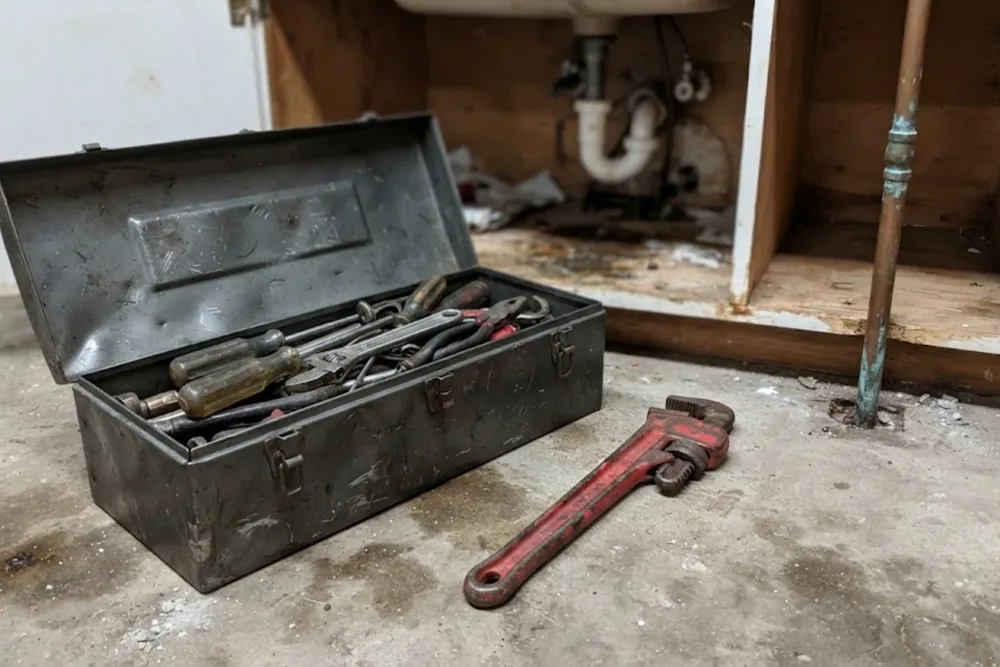
Emergency plumbing repair: burst, cracked or leaking pipes
A burst or cracked pipe is the clearest emergency in plumbing. Shut off the main valve at the house, open a faucet low in the house to relieve pressure, and switch off power to any room where water is near outlets or appliances. Then call (954) 697-4920 and a technician is dispatched 24/7.
Once the water is off, the visit is about finding the failed section, cutting out the damaged pipe and replacing it with the right material for the connection. Copper, CPVC, PEX and galvanized pipe all join differently, which is why identifying the existing pipe matters.
When to call general repair instead of a specific service page
Most plumbing problems fall clearly into a category, leak detection, drain cleaning, a water heater issue, but some don't, or involve more than one thing at once. A renovation that's uncovered old, unlabeled plumbing, a strange noise somewhere in the walls with no obvious source, or a combination of small issues that add up to more than any one page covers are all reasons to just call and describe what's happening rather than guess which specific page applies.
What a general repair visit actually involves
A technician diagnoses the actual issue on site rather than assuming it matches whatever was described over the phone, since plumbing symptoms often point in more than one possible direction until someone looks directly at the fixture or line involved. Pricing gets confirmed once the actual scope is clear, the same standard applied across every service on this site.
Examples of what lands here
A renovation uncovering old galvanized pipe with no clear starting or ending point, a mystery noise in a wall that could be a pipe, a fixture, or something unrelated to plumbing entirely, a combination of a minor leak and a slow drain that don't obviously connect, and a new homeowner wanting a general plumbing walkthrough before moving in are all realistic examples of calls that land here rather than under one specific service page.
None of these require the caller to have already diagnosed the problem. Describing symptoms honestly, even vaguely, is enough for dispatch to send someone equipped to figure out what's actually going on.
Why this page exists at all
Most lead-generation plumbing sites force every visitor into a specific category that may not match their actual situation. We'd rather have a page that says plainly: if nothing else on this site quite fits, call anyway, since the alternative is someone with a real problem not calling at all because they couldn't find the right page.
How pricing works when the scope isn't clear upfront
Since general repair calls don't fit a fixed-scope service page, pricing is confirmed after diagnosis rather than quoted in advance over the phone. That's the same standard applied everywhere else on this site, just more explicit here since there's no specific service name to anchor an initial estimate to.
Low water pressure
Low pressure at every fixture usually points to a partly closed main valve, a failing pressure regulator or corroded supply pipe, while low pressure at a single fixture is more often a clogged aerator or a worn cartridge. Check whether hot and cold are both low first, because low hot water only points to the heater.
Plumbing installation, remodel and new construction work
Besides repairs, this page covers adding or moving fixtures, bathtub and shower installation, kitchen and laundry hookups and rough-in work for additions. Tell us what you are planning and whether permits are needed so the scope and price are confirmed before work starts.
Gas smells and gas lines
If you smell gas, leave the building, do not use switches or phones inside, and call 911 or your gas utility from outside. Gas appliance hookups, stove and fireplace connections and gas line inspections are separate from water work and need a technician qualified for gas, so confirm that on the call.