
Emergency water heater repair: leaking tank or no hot water
A water heater leaking from the tank body, the bottom or the relief valve discharge is an emergency, because a failed tank can release a full tank of water within minutes. Shut off the cold supply valve above the heater, turn the power or gas control to off, and call (954) 697-4920. If only a fitting is dripping, a repair may be enough. If the tank itself is corroded, replacement is the realistic fix.
No hot water at all is urgent for a household but usually not an emergency. The common causes are a failed element or thermostat on an electric unit, a pilot or igniter fault on a gas unit, a tripped breaker or a failed relief valve. We diagnose which one it is before recommending a repair.
The most common water heater failures we see
No hot water at all usually points to a failed heating element (electric) or a pilot and thermocouple issue (gas), both straightforward same-day fixes. Water that's hot but not hot enough, or that runs out fast, more often means sediment buildup insulating the heating element from the water, which is common in this area's moderately hard water once a tank passes the five-year mark.
A leak at the tank's base is the one that changes the conversation from repair to replacement. Fittings and valves can be repaired. A corroded tank seam itself cannot, and continuing to run a leaking tank risks a much bigger cleanup if it fails completely overnight.
What we check before recommending a fix
Before replacing any part, we check the anode rod, since a depleted anode rod is often the real reason a tank is corroding faster than it should, and replacing it can add years to a tank that would otherwise need full replacement soon. We also check the pressure relief valve, since a valve that's stuck or weeping is a safety issue independent of whatever else brought us out.
For gas units specifically, we check venting and gas supply pressure as part of any repair, not just the component that appears to have failed, since a venting issue can cause symptoms that look like a heater problem but aren't.
What to do if a water heater is actively leaking or making noise
Shut off the cold water supply valve on top of the tank first, then the power source, the breaker for electric units or the gas shutoff valve for gas units, if it's safe to reach. That combination stops the situation from getting worse while waiting for a technician, whether the issue is a leak or a unit that's making a concerning noise.
A rotten-egg smell near a gas water heater is different from a normal repair call. Leave the house and call from outside, then contact the gas utility in addition to a plumber, since that smell can indicate a gas leak rather than a water heater malfunction alone.
Heat pump water heaters, flushing and service visits
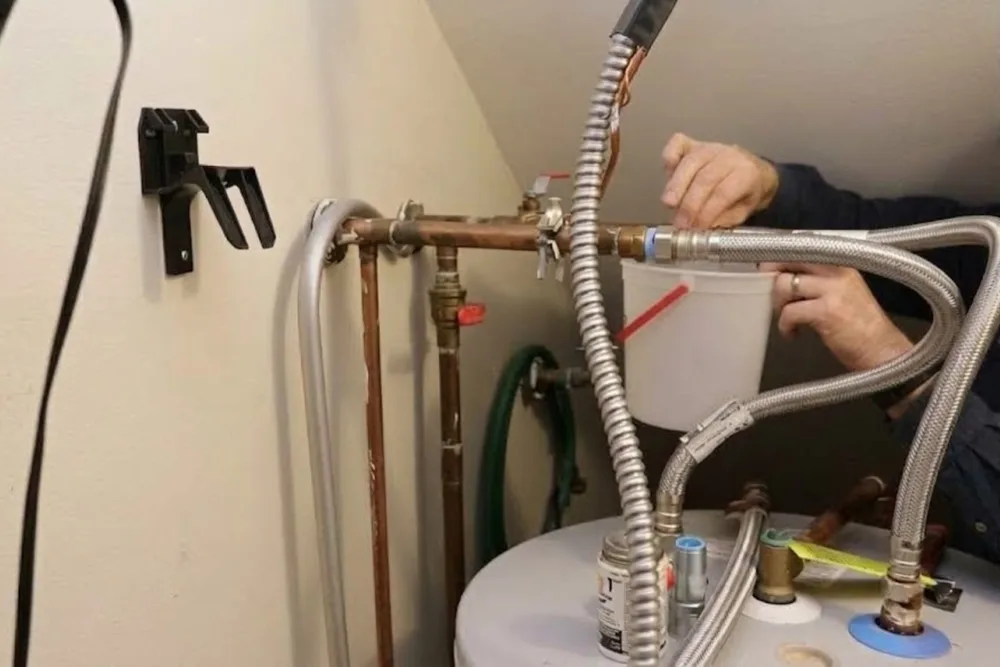
Hybrid heat pump water heaters have a compressor, fan and condensate drain on top of the tank, so service means checking more than elements and thermostats. Flushing a tank heater clears sediment that shortens its life, and it is a good time to check the anode rod and the relief valve.
When a repair would cost close to a new unit, we say so and point to water heater installation and replacement. Tankless owners can read about tankless descaling.