
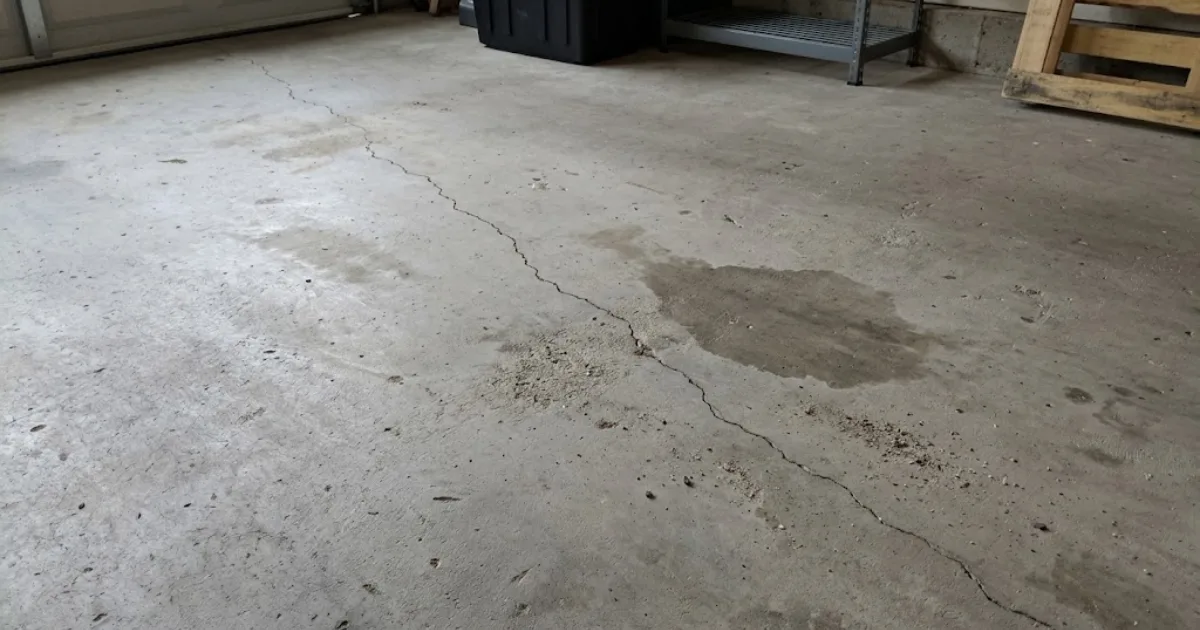
Why slab leaks are especially common in this part of Florida
A slab leak happens when a water line running underneath a home's concrete foundation develops a leak, almost always from internal corrosion in older pipe material. Pompano Beach and its neighboring coastal cities have a real concentration of homes built between the 1950s and 1970s, right when cast-iron and galvanized pipe were standard, and that pipe is now well past the age where this kind of corrosion becomes likely.
It's not a defect specific to any one builder or neighborhood. It's simply what happens to that pipe material after 40 to 50 years underground, regardless of how well the home was originally built.
The five signs worth paying attention to
A warm spot on the floor, usually over a hot water line, is one of the more distinctive signs, since it's not something a home should ever feel through tile or carpet under normal conditions. A water bill that's jumped with no new usage to explain it is another, often the very first sign a slab leak leaves, well before anything is visible.
The sound of running water when every fixture in the house is off, a wet or unusually green patch on the lawn near the home's footprint, and low water pressure across the house rather than at a single fixture round out the list. Any one of these on its own is worth a look. Two or more together usually means something is actively leaking right now.
Why waiting rarely makes the situation better
A slab leak doesn't heal itself, and it typically doesn't stay small. Water continuing to move under a foundation can eventually affect soil stability beneath the slab, and the longer it runs, the more water damage restoration becomes part of the conversation alongside the plumbing repair itself. Catching it early, while it's still just a warm spot or an unexplained bill increase, keeps the whole situation smaller and less expensive.
How a leak actually gets found and fixed
Acoustic listening equipment and thermal imaging locate a slab leak's approximate position without cutting into the floor first, which is what lets a repair open one targeted section instead of tearing up an entire room. From there, the choice is usually between repairing that one spot directly or rerouting a short section of new pipe above the slab to bypass the damaged run entirely.
If the leak turns out to be the first sign of broader corrosion along an aging line, a repiping conversation is the more honest long-term answer than repeating the same patch every year or two.
What to do if you suspect a slab leak right now
Shut off the main water valve if the leak seems significant, note when the symptoms started, and check the last two water bills side by side for comparison. None of this requires special equipment, and having these details ready speeds up the diagnosis once a technician arrives.
A real example of how this plays out
A homeowner in a 1968-built house near the coast notices the water bill jumped about 40% with no change in household habits. Nothing is visibly wet anywhere. Checking the meter with everything off confirms it's still moving. A technician arrives, locates a warm patch near the kitchen using thermal imaging, and confirms a slab leak on the hot water line feeding that side of the house.
Because it was caught early, before any visible damage, the repair is a single targeted access point rather than a larger restoration project. This is the outcome catching the early signs makes possible, compared to waiting until the leak has already caused visible damage to flooring or drywall.
Why professional equipment beats guessing
It's tempting to try to narrow down a slab leak's location by feel, checking for warm spots barefoot across the whole house, but this misses leaks on cold water lines entirely and can miss a hot water leak that hasn't yet warmed a large enough area to notice. Acoustic equipment picks up the sound of water escaping under pressure, audible through the slab even when no warm spot has developed yet, which is why professional detection consistently outperforms a manual room-by-room check.
The City of Pompano Beach meter test
The City of Pompano Beach gives a simple way to check for a leak. Take a meter reading, use no water for one hour, then take a second reading. If the reading has changed, the City says you have a leak.
The City reads meters electronically by radio, and asks owners not to let grass and landscaping overgrow the meter box. Clearing the box makes the test easy. If the number moves and nothing inside the house is running, a slab leak is one of the places to look.
We also send technicians to Lighthouse Point and Margate. See our Lighthouse Point plumber and Margate plumber pages for details on those areas.