
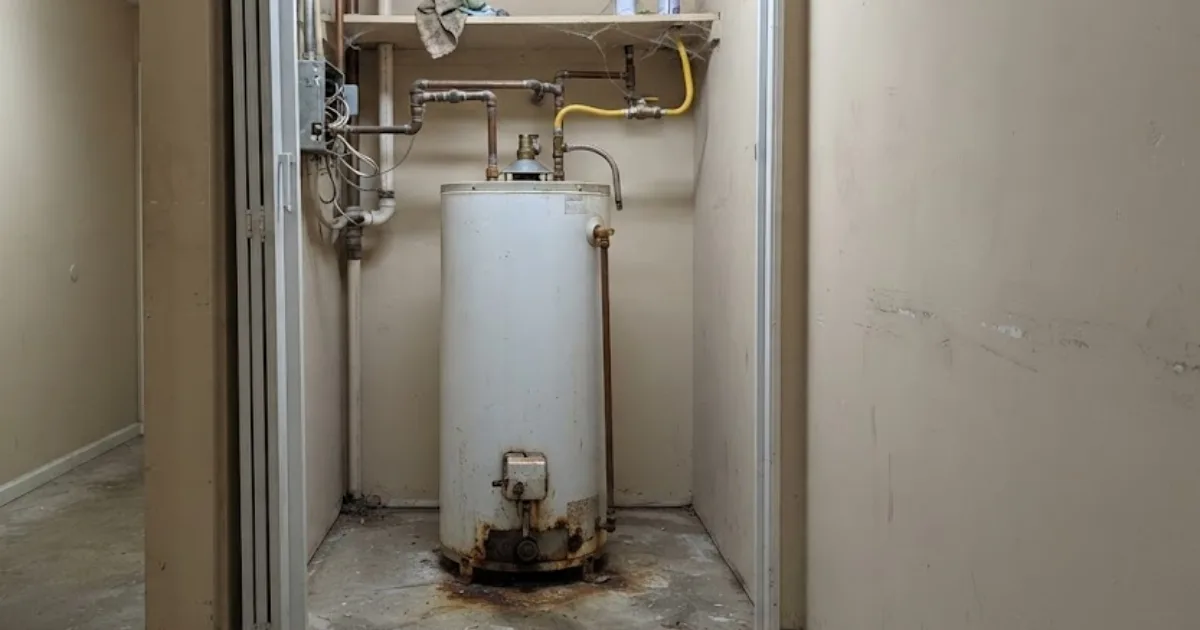
The honest lifespan range for this area
Most tank water heater manufacturers advertise a 10 to 12 year lifespan, but that number assumes average water conditions. South Florida's moderately hard water accelerates sediment buildup inside the tank, which means a realistic range for this area runs closer to 8 to 12 years for a standard tank unit, with units on the shorter end of that range more common in households that never flush the tank.
Tankless units run longer, often 15 to 20 years, largely because there's no tank to accumulate sediment at the bottom. Scale still builds up inside the heat exchanger, though, which is why regular descaling matters more here than it would in an area with softer water.
What actually shortens a water heater's life
Sediment buildup insulates the heating element from the water it's supposed to be heating, forcing the unit to work harder and shortening its effective life even before an outright failure. A depleted anode rod, the sacrificial metal rod designed to corrode instead of the tank itself, is another common factor. Once it's fully consumed, the tank starts corroding directly, often years before the unit would otherwise have failed.
Setting the thermostat higher than necessary also accelerates wear across the whole system, from the tank itself to the fixtures it feeds, without meaningfully improving comfort for most households.
Signs it's closer to the end than the beginning
Rust-colored water from the hot side only, a tank that's audibly rumbling or popping from sediment, and a unit that's needed more than one repair in the past year or two are all signs worth taking seriously. A leak forming at the tank itself, rather than at a fitting or valve, means the tank has failed structurally and repair isn't an option regardless of the unit's age.
Simple habits that extend the realistic lifespan
Flushing the tank annually removes sediment before it becomes a real problem, and checking the anode rod every two to three years catches depletion before the tank itself starts corroding. Neither task is expensive, and both meaningfully extend how long a unit lasts in this area's water conditions specifically.
For a tankless unit, keeping to the recommended 12 to 18 month descaling interval matters even more here than the manufacturer's generic guidance might suggest, given the water hardness most South Florida households are actually dealing with.
How to check a water heater's actual age
The manufacture date is usually encoded in the serial number on the unit's data plate, though the format varies by brand. Many manufacturers use the first two digits of the serial number to represent the week and year of manufacture, while others spell it out more directly. If the data plate isn't clear, the manufacturer's website or customer service line can usually decode a serial number quickly.
Knowing the actual age, rather than guessing based on how long a current homeowner has lived in the house, matters for deciding whether a repair is worth it or whether the unit is close enough to its expected end of life that replacement is the more sensible call.
What happens during a routine annual check
An annual water heater check, whether done alongside another service call or as its own visit, typically includes testing the pressure relief valve, checking the anode rod's condition, flushing sediment from the tank, and inspecting for any early signs of leaking at fittings or the tank itself. This kind of proactive check costs far less than an emergency call for a unit that's failed completely, and it's the single best way to actually extend a water heater's realistic lifespan in this area's water conditions.
Water heater life and your Pompano Beach water
The City of Pompano Beach lists softening and corrosion control among the steps in treating its water. Even so, the water at your tap depends on which utility serves you and where you live, so we do not give a Pompano Beach lifespan number from memory.
The unit's own label shows its age, and a flush shows how much sediment has built up in the tank. Test your tap or ask your utility for its water quality report if you want to understand what your heater is working with.
We also send technicians to Oakland Park and Deerfield Beach. See our Oakland Park plumber and Deerfield Beach plumber pages for details on those areas.