
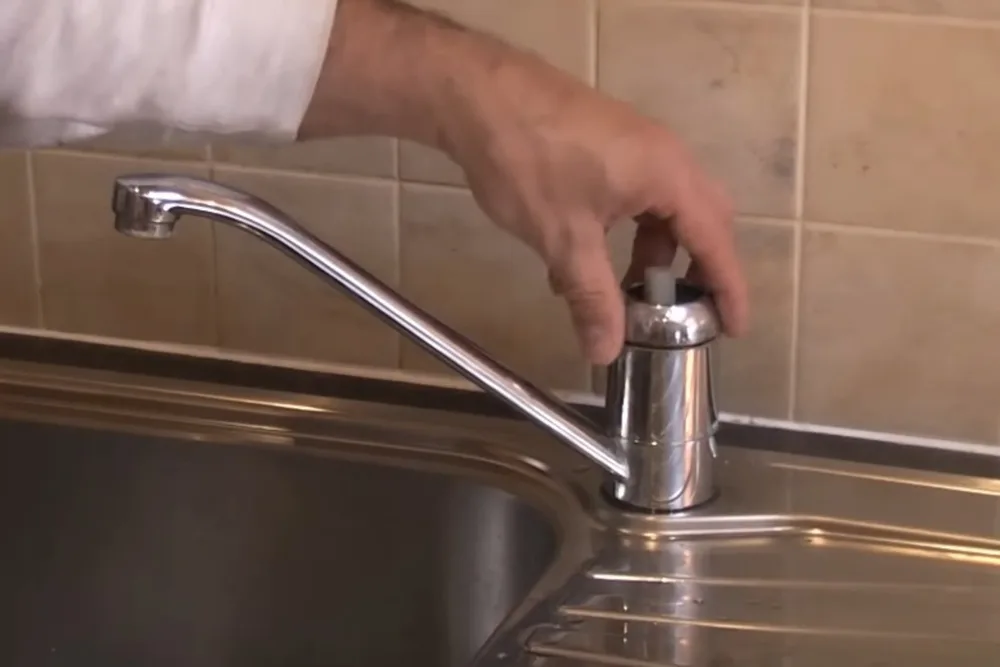
Emergency faucet and valve repair: burst or broken supply valve
A supply valve that snaps under the sink or behind a toilet, a faucet connector that bursts or a handle that will not close can flood a room in minutes. Find the shutoff valve for that fixture and turn it clockwise. If the fixture's own valve is the broken part, close the main valve at the house and call (954) 697-4920.
Replacing a failed stop valve is usually a quick job once the water is off, and it is worth replacing the matching valve on the other side of the sink if it is the same age.
The most common faucet and sink problems
A dripping faucet is almost always a worn cartridge, O-ring, or washer inside the fixture, a straightforward and inexpensive repair on most faucet models. Low pressure at a single faucet, when the rest of the house is normal, usually means a clogged aerator rather than a supply-line issue, which is a quick fix compared to the water-pressure problems that affect a whole house.
A leak under the sink, at the supply lines or the drain trap connections, is worth attention sooner rather than later, since that's exactly the kind of slow leak that causes cabinet and subfloor damage over months before anyone notices standing water. Checking under the sink periodically, even without an obvious problem, catches this early.
Repair or replace a faucet
A faucet under 10 years old with a single failed part is almost always worth repairing rather than replacing. Beyond that age, especially with mineral buildup visible inside the fixture or a discontinued cartridge style, replacement is often the more practical option, and we'll say which situation a specific faucet is in rather than defaulting to either answer.
Choosing a replacement faucet or sink
Finish durability matters more than it might seem for a kitchen faucet specifically, since it sees more daily use than almost any other fixture in the house. A mid-range finish from an established brand generally outlasts a budget faucet with a premium-looking finish that wears within a year or two of regular use.
For a sink replacement, matching the existing countertop cutout saves significant cost compared to modifying the counter itself, which is why we measure the existing opening before recommending options rather than starting from a catalog and working backward.
Bathroom versus kitchen fixture differences
Kitchen faucets see heavier daily use and more exposure to grease and food debris, which is why finish and cartridge durability matter more there than in a bathroom. Bathroom sink faucets more commonly develop mineral buildup from standing water in less frequently used guest bathrooms, a different failure pattern that calls for different maintenance advice depending on which room the fixture is in.
Shower valves, tub spouts and outdoor spigots
A shower that drips after the handle is closed usually has a worn cartridge. A tub spout that sprays from the diverter or leaks at the wall needs the spout or the valve behind it replaced. Outdoor spigots that leak at the handle stem or from the back can be repaired or replaced, and a spigot leaking into the wall should stay shut off at its interior valve until it is fixed.
Laundry and utility sink faucets follow the same logic. A leak at the supply valve behind a washing machine is worth shutting off right away. For a leak that reaches the toilet or the main line, see toilet repair and installation and general plumbing repair.