
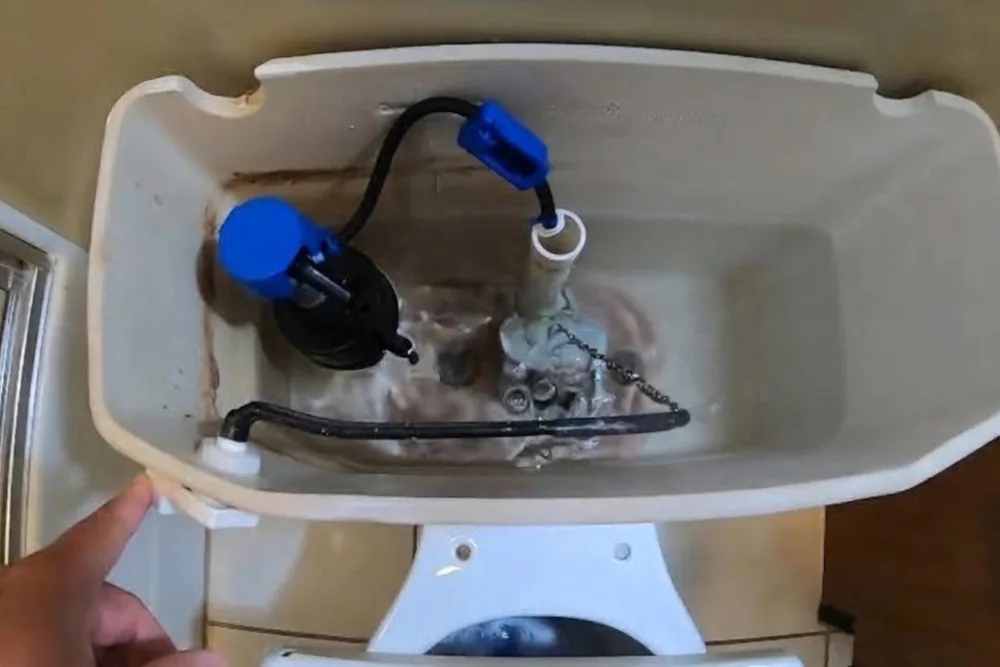
Emergency toilet repair: overflowing or leaking toilet
A toilet that is overflowing or leaking at the base should be stopped first. Close the supply valve behind the toilet by turning it clockwise, lift the tank lid and raise the float to stop the tank refilling, and keep the area clear. If the valve will not close, shut off the main water valve and call (954) 697-4920.
A repeat overflow with other fixtures slow or gurgling points to a main line problem rather than the toilet itself, which is a job for drain cleaning.
The most common toilet problems
A toilet that runs intermittently or constantly almost always means the flapper valve isn't sealing properly, an inexpensive part that's one of the most common plumbing repairs there is. A weak or incomplete flush more often points to a partially clogged trap or, on an older toilet, mineral buildup restricting the rim jets that push water into the bowl.
Water at the base of the toilet, rather than from the tank, usually means the wax ring seal between the toilet and the drain flange has failed, which requires pulling the toilet to replace, not something fixable from above.
When toilet installation makes more sense than another repair
A toilet older than 15 to 20 years, especially a pre-1994 model using significantly more water per flush than current standards, is often worth replacing outright rather than repairing repeatedly, both for water savings and because parts for very old models can be harder to source. We install to match the existing rough-in measurement so it's a straightforward swap in most standard bathrooms.
Choosing a replacement toilet
Bowl height, flush type, and rough-in measurement (the distance from the wall to the drain center) are the three specs that actually determine fit and comfort, more than brand or price point alone. A comfort-height bowl suits most adults better than a standard-height one, and a dual-flush or pressure-assisted model uses meaningfully less water than an older gravity-flush design without sacrificing performance.
We confirm the existing rough-in measurement before recommending any specific model, since installing the wrong rough-in size turns a straightforward swap into a more involved plumbing modification.
Multiple bathrooms, one at a time or all at once
For a household replacing toilets in more than one bathroom, doing them together often costs less per unit than separate visits, and lets every bathroom match if that matters aesthetically. For a single failing toilet with the rest of the house fine, there's no need to replace fixtures that aren't causing a problem just because one is.
Running toilets, broken flush levers and fill valves
A toilet that runs, refills on its own or has a flush lever that no longer lifts the flapper usually needs a fill valve, flapper or lever replaced. These are inexpensive repairs compared with the water they waste. A broken lever on an older one-piece tank is simple to replace but needs the right model, so tell us the brand if you can read it inside the tank.