
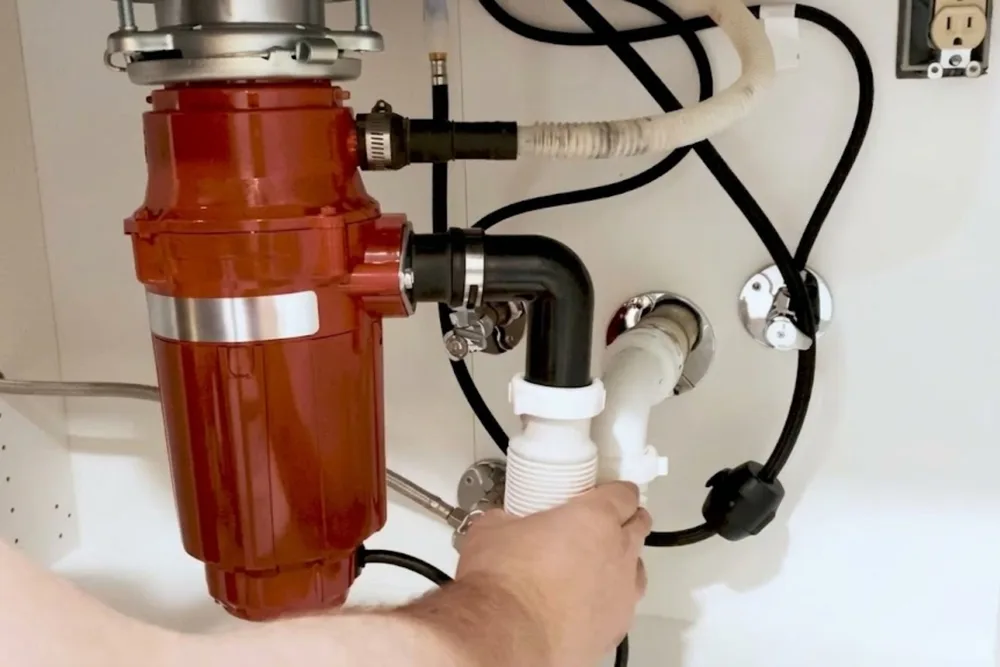
Emergency disposal repair: leaking under the sink
A disposal leaking from its body, the dishwasher inlet or the drain flange can soak a cabinet quickly. Turn off the disposal switch, unplug the unit or shut off its breaker, close the sink supply valves if the leak is heavy, and call (954) 697-4920.
A leak at the flange or a connection can often be resealed, but a leak through the body of the disposal means replacement.
The three most common disposal problems
A disposal that hums but doesn't spin usually means the flywheel is jammed, often fixable in minutes with the reset button and the hex key most units include, though a technician can clear a stubborn jam quickly if the homeowner's own attempt didn't work. A disposal that's completely silent when switched on is more often an electrical or motor issue rather than a jam.
A leak at the base of the disposal, rather than at the connections above it, usually means the internal seal has failed, which typically means replacement rather than repair, since that seal isn't something serviced in place.
Choosing a replacement unit
Horsepower and grind stages are the two specs that actually matter for how well a disposal handles a household's real usage, not brand name alone. A single-person household with light use doesn't need the same unit as a family that regularly puts fibrous vegetable scraps down the drain. We size the replacement to actual usage rather than defaulting to a mid-range unit.
Installing a disposal where there wasn't one before
Adding a disposal to a kitchen that never had one means confirming the sink has the right drain configuration, that there's an available electrical circuit or outlet under the sink, and, for a dishwasher already connected to the same drain line, that the disposal's dishwasher inlet gets properly connected rather than left capped. None of this is unusual, but skipping any one of these steps is how a new installation ends up leaking or tripping a breaker within the first week.
For older homes in this coverage area without a dedicated outlet under the sink already, adding one is sometimes part of the job, which we'll flag as part of the estimate rather than as a surprise add-on afterward.
What not to put down a disposal, even a working one
Fibrous vegetable scraps like celery and corn husks, coffee grounds in large quantities, grease and oil, and hard items like bones or fruit pits all shorten a disposal's working life or cause jams even in a properly functioning unit. None of these will break a disposal on the first occurrence, but consistent habits around what goes down the drain make a real difference in how often a unit needs service.