
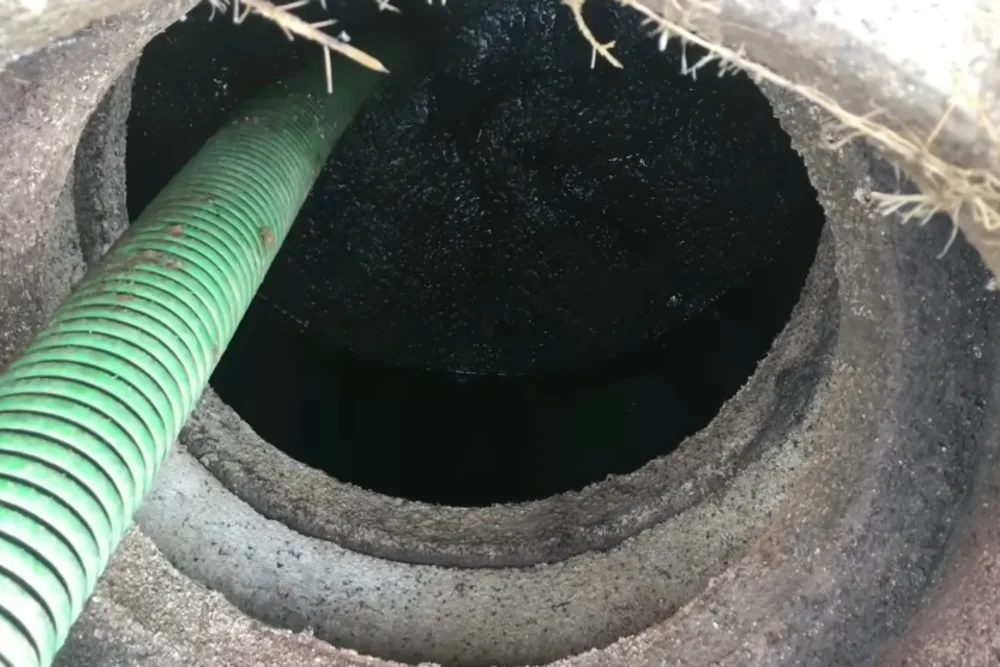
Who this actually applies to in this coverage area
Most of Pompano Beach and its immediate neighbors run on county or municipal sewer, so this service applies to the smaller share of properties, generally older or more rural parcels, still on a private septic system. If a property has a septic tank and drain field rather than a connection to public sewer, pumping on a regular schedule is what keeps it from backing up.
Signs a tank is due for pumping
Slow drains throughout the house with no clog anywhere, a sewage smell near the tank or drain field, unusually lush or soggy grass over the drain field, and gurgling toilets are all signs a tank is reaching capacity. Waiting past these signs risks solids reaching the drain field itself, which is a far more expensive repair than routine pumping.
A typical household tank needs pumping every three to five years depending on household size and tank capacity, though a property with a garbage disposal or larger household tends toward the shorter end of that range.
Emergency septic backup: what to do right now
Stop using water in the house, showers, laundry, dishwasher, until the system is checked, since additional water makes an already-full tank back up further. Avoid direct contact with any sewage that's surfaced in the yard, and keep children and pets away from the affected area until it's addressed.
Caring for a septic system between pumpings
What goes down the drains matters more for a septic system than for a home on county sewer, since the tank relies on bacterial breakdown that harsh chemicals, excessive bleach, and non-biodegradable items disrupt. Garbage disposal use should be minimal on a septic system specifically, since food waste adds solids the tank has to process faster than it's designed for.
Keeping heavy vehicles and construction off the drain field area protects the buried pipes from compaction damage, and planting only grass, not trees or deep-rooted shrubs, directly over the field avoids the same root intrusion problem that affects sewer lines elsewhere in this coverage area.
What we check during a pumping visit beyond just pumping
Beyond removing solids and liquids, a thorough pumping visit includes checking the tank's baffles for damage, noting the sludge and scum layer thickness for reference at the next service, and a visual check of the drain field area for signs of failure like unusually wet or sunken ground. Catching an early drain field issue during a routine pumping is far better than discovering it only once it's fully failed.
Septic backups that look like drain clogs
A septic system backing up into the house is an emergency, and it often starts looking like an ordinary drain clog. If several fixtures are slow at once, or sewage smell rises from a floor drain, the tank may be full or the drain field may be saturated. Cabling the line will not fix that, and pumping the tank is the first step.
If pumping does not stop the problem, the next question is the drain field, which a technician can assess during the visit. For homes on sewer instead of septic, sewer line repair is the right page.