
Emergency sewer backup: what to do in the first minutes
Sewage coming up through floor drains, tubs or toilets is an emergency. Stop running water, do not flush, and keep people and pets away from the affected area. Call (954) 697-4920 and we dispatch 24/7 to clear the line and then find out why it backed up.
Clearing the line stops the immediate backup. A camera inspection afterward shows whether the cause was a one-time clog or a broken, offset or root-filled section that will back up again. That second step separates a lasting fix from a repeat call. See sewer camera inspection for how that works.
Signs of a sewer line problem worth acting on
Multiple drains backing up at once, a foul smell in the yard over the line's path, unusually green or soggy grass along one stretch of lawn, and gurgling from drains when the washing machine runs are all signs pointing at the main line rather than a single fixture. Any of these on their own is worth investigating. More than one together usually means the problem is active now.
How the repair method gets decided
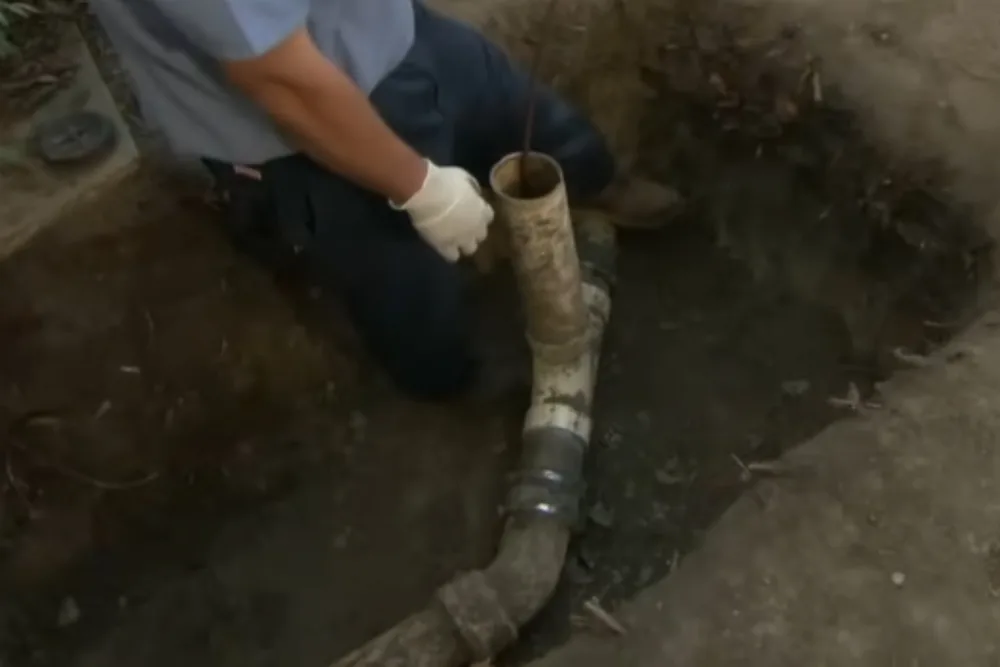
A camera inspection comes first on nearly every sewer line repair, since it shows whether the damage is a crack or root intrusion suited to trenchless lining, or a collapsed section that needs traditional excavation for that specific stretch. Root intrusion from mature trees is a common cause on older lines in this area, and the fix depends on how much of the pipe roots have actually compromised, not just where they entered.
For a full collapse or a line that's shifted enough to lose proper slope, traditional dig-and-replace is sometimes the more honest answer even though it's more disruptive, and we'll say so rather than push a trenchless option that wouldn't actually hold.
What to do before we arrive for a sewer backup
Avoid running water or flushing toilets until the technician arrives, since additional water can worsen a backup that's already at capacity. If sewage has reached living space, avoid direct contact and keep the area ventilated. Shut off the main water valve if the backup is severe enough that fixtures are overflowing.
Reducing the odds of another sewer backup
Once a line has been repaired, a few habits reduce the odds of another backup: avoiding flushing wipes even ones labeled flushable, keeping grease out of kitchen drains entirely, and having a recurring root intrusion issue jetted on a schedule rather than waiting for the next full backup. None of these guarantee a line never has another issue, but they meaningfully reduce how often the more serious version happens.
For a property with mature trees near the sewer line, a periodic camera check every few years catches root intrusion while it's still a jetting fix rather than letting it progress to a full repair.
What a typical repair timeline looks like
A trenchless repair on a confirmed, accessible section often finishes within a single day once the camera inspection and quote are done. A traditional dig-and-replace repair takes longer, typically one to three days depending on the length of pipe affected and how much restoration the excavation itself requires afterward. We give a realistic timeline once the actual scope is known, not before.
Main line cleaning versus lateral repair or replacement
A main line that clears with cabling and stays clear is a cleaning job. A lateral with a collapsed or heavily offset section needs repair or replacement, and trenchless methods can avoid digging up a driveway or landscaping. We explain which category the camera footage shows before recommending either.
Properties on septic need a different first step, because the cause is often a full tank or a drain field problem. See septic tank pumping for that case. A line that only needs routine clearing is covered under drain cleaning.