
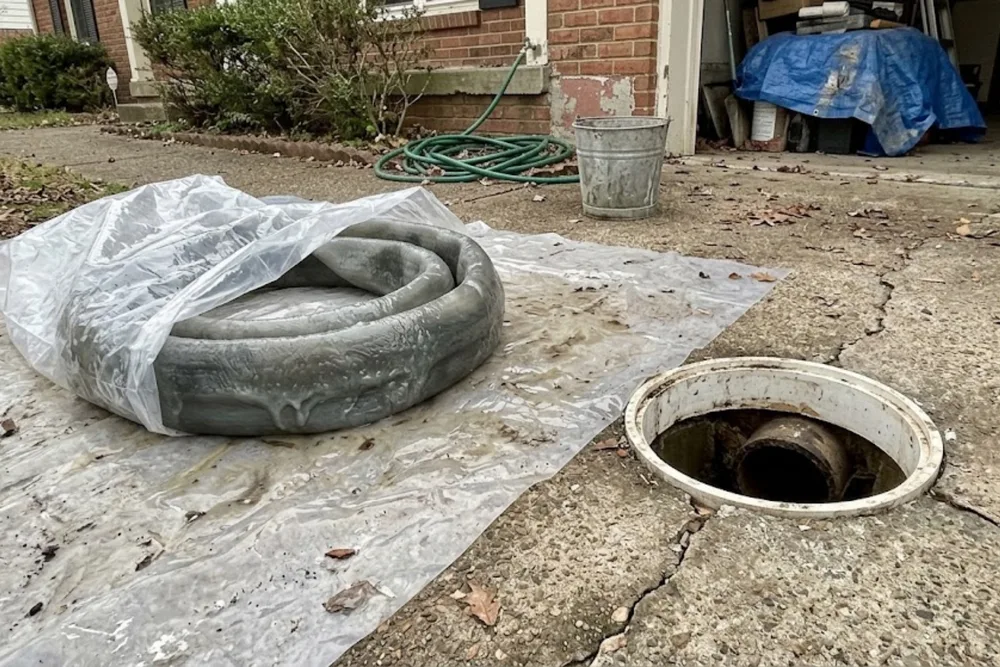
How trenchless lining works
A flexible liner coated in resin gets inserted into the damaged pipe through an existing access point, then inflated and cured in place, forming a new pipe within the old one. For a cracked, root-intruded, or offset clay or cast-iron line, this repairs the pipe's full length without digging a trench along its entire run.
It's not the right fix for every situation. A severely collapsed section, rather than a cracked or root-intruded one, sometimes still needs a traditional dig-up for that specific section, and a camera inspection is what determines which situation applies before any pricing gets discussed.
Where trenchless makes the most sense in this area
This option comes up most for older sewer lines under mature landscaping, driveways, or pool decks, where a traditional dig-up would mean real, costly restoration afterward on top of the pipe repair itself. Given how much of this area's housing sits on lots developed decades ago, mature trees near the sewer line are common enough that root intrusion is a real, recurring reason this method gets requested.
How long a trenchless liner lasts and what affects the cost
A properly installed liner typically carries a 50-year manufacturer expectation, comparable to a new pipe, since it effectively becomes a new pipe within the old one rather than a patch. Cost depends primarily on the length and diameter of pipe being lined and how many access points the job requires, which is why the camera inspection happens before any firm number gets discussed.
Compared to a traditional dig-up, trenchless is often a similar or even lower total cost once yard, driveway, or landscaping restoration is factored in, even though the lining process itself can look like the more expensive line item in isolation.
What a typical repair timeline looks like
A trenchless repair on a confirmed, accessible section often finishes within a single day once the camera inspection and quote are done. A traditional dig-and-replace repair takes longer, typically one to three days depending on the length of pipe affected and how much restoration the excavation itself requires afterward. We give a realistic timeline once the actual scope is known, not before.